25 May 2026
Women and paratransit in Antananarivo: what the fieldwork reveals
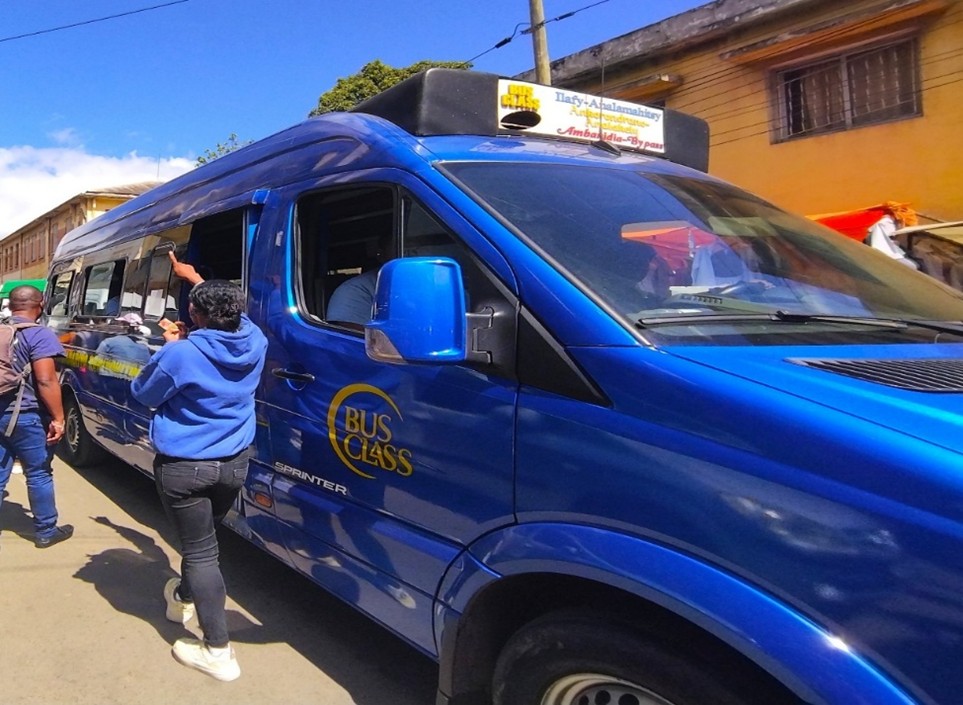
In Antananarivo, the capital of Madagascar, ‘Taxis Be’ – the minibuses that make up Madagascar’s informal transport sector – and motorbike taxis criss-cross the city all day long. Yet one fact is glaringly obvious: women remain almost entirely absent from these trades.
In late 2025, Ikanto ANDRIANANJAVAO, project manager for the feminisation of paratransit professions in Africa, at the CODATU Indian Ocean branch, conducted an exploratory study on this subject. Over 300 people took part. The survey covered 67 Taxi Be cooperatives, 41 male drivers and conductors, 7 female conductors (the only ones identified in the field), 72 motorbike taxi drivers, and 120 users of both modes, with an equal number of men and women.
The results presented here reflect trends observed in the field and are not statistical data representative of the sector as a whole. What we have learnt from the field, however, goes far beyond the simple observation that women are under-represented.
A revealing paradox
The figure that sums it all up: not a single female driver was identified among the 4,398 Taxi Be drivers in the 67 cooperatives studied.
Yet, 85% of users surveyed say they are willing to get into a vehicle driven by a woman, whether in Taxi Be or motorbike taxis. Those who have already had this experience rate it positively or neutrally, without exception. The problem therefore does not seem to lie with the passengers. Rather, it lies in the organisation of the sector and its informal recruitment networks, where men mainly recruit other men.
Another finding reinforces this observation. Among drivers who have never worked with a woman, 24 believe that women drive less well than men. This figure drops to 2 among those who have already had direct experience with a female colleague.
Insecurity: a sector-wide issue rather than a gender issue
What stands out most from the interviews is the consistency of the responses. Male drivers, female drivers and passengers all cite safety as the primary obstacle.
In the motorbike taxi sector, there is complete unanimity: all 72 drivers surveyed cite insecurity and harassment as the number one barrier to the integration of women.
This finding highlights an important point: insecurity is not a pretext used to exclude women. It is a structural reality of the sector, which women experience more intensely: targeted harassment, assaults, constant pressure. Of the seven women interviewed, five reported having experienced harassment or discrimination in the course of their work. Those who remain learn to manage conflicts, protect themselves and cope in a difficult environment. A genuine ability to adapt, which should not, however, be a prerequisite for entering this profession.
Added to this is another, more subtle barrier: shame. Several women spontaneously mention this psychosocial barrier, not as an external constraint, but as an internalised pressure that discourages entry into the sector even before the issue of safety arises. ‘Many women want to do this work, but they feel ashamed,’ explains one of them. Miantsoantso — the practice of calling out to passengers — often comes up in discussions. For many, this high level of public exposure is a primary obstacle.
Discrimination perceived as systemic
Among the users surveyed, 73% believe that women are likely to face discrimination in the informal transport sector. These perceptions attribute this discrimination to several sources: customers, male colleagues, cooperatives, family and society. No single actor is identified, suggesting a perception of a diffuse phenomenon linked to the sector’s overall functioning rather than to isolated individual behaviours.
Retention data support this finding: the annual turnover rate for female conductors stands at 21%, compared with 7% for female transport operators (vehicle owners). These figures are drawn from an exploratory sample and do not allow for definitive conclusions. However, they suggest a trend: the problem concerns not only access to the profession, but also retention within it.
Taxi Be and motorbike taxis: two sectors, two dynamics
The analysis reveals a significant contrast between the two modes of transport.
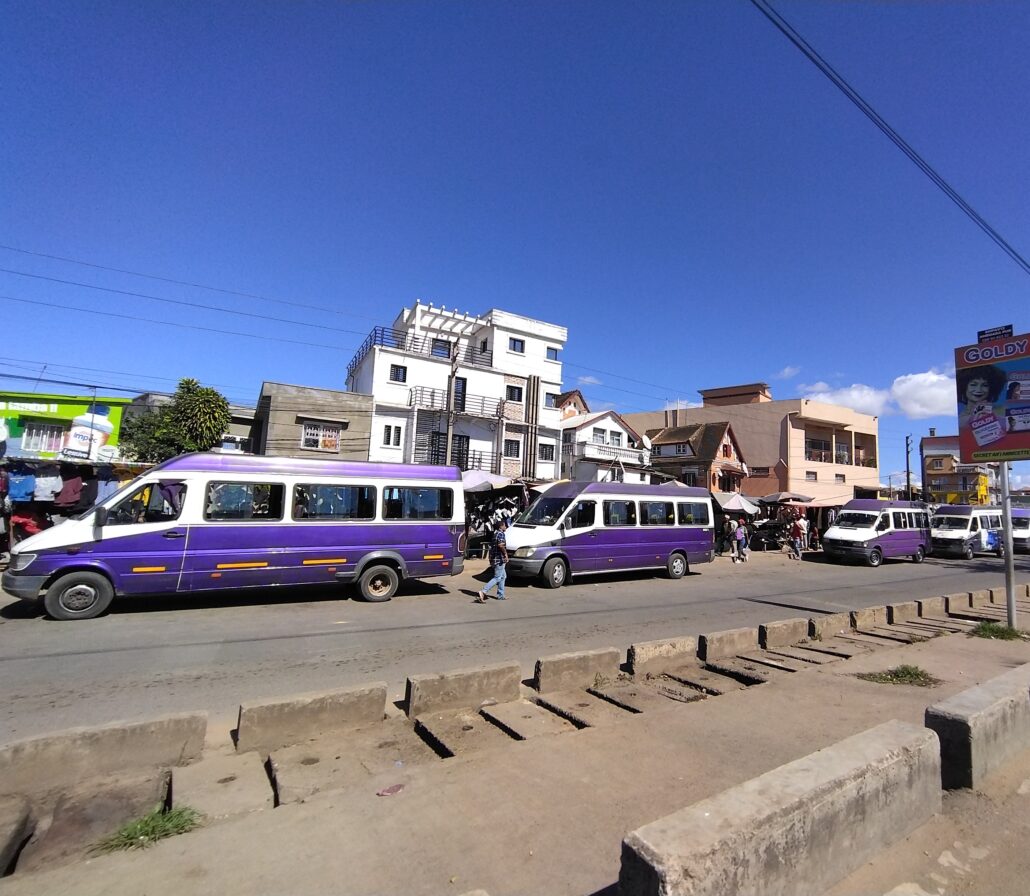
In Taxi Be, organised around long-established and predominantly male cooperatives, resistance to gender diversity remains strong. Even among drivers who have already worked with a woman, 17 out of 24 do not wish to repeat the experience. Acceptance of women within the cooperatives is deemed low or non-existent by 44% of respondents.
Motorcycle taxis present a different dynamic. Their more individual and less formalised organisation leaves more room for personal choice. A majority of drivers, including the most experienced, say they are in favour of a greater presence of women.
Notably, it is often the most senior drivers who are the most open-minded.
What the fieldwork reveals in terms of prospects
The assessment does not stop at observation. It highlights several concrete avenues.
The first seems simple: facilitating access to a driving licence. A female Taxi Be conductor who has been in the role since 2017 sums up the situation clearly: ‘If we were supported in getting a free driving licence, I am 100% sure there would be plenty of women ready to work. The problem is that they can’t afford it.’
The assessment also raises a more structural avenue: the modernisation of the sector itself as a lever for integration. The transition to more formalised transport systems could reduce several of the identified barriers. In a modernised Taxi Be, the female conductor no longer needs to shout to attract passengers. On-board cameras can reduce exposure to harassment. A formal contract replaces the verbal agreement. In other words, modernisation could encourage more women to enter the sector.