26 January 2026
Buying and operating buses in Africa: a guide that remains relevant for public decision-makers
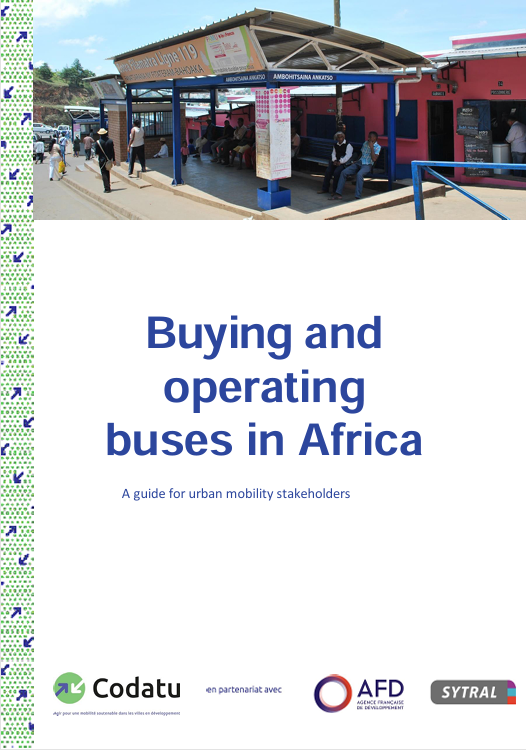
In many African cities, improving public transport systems is a major driver of urban, economic and social development. However, before launching a city bus procurement project, one step is essential: being able to answer clearly and positively the 10 key questions that determine the success of such a project.
The idea is deliberately simple and demanding: do not purchase buses until these answers are clear, shared and secure. Governance, financing, operation and maintenance organisation, institutional framework… these elements determine the sustainability of projects much more than the choice of rolling stock alone.
However, bus acquisition and operation projects still frequently encounter difficulties: fragile economic models, equipment unsuited to local contexts, lack of institutional coordination and insufficient preparation for long-term operation.
It was in response to these challenges that the Guide to Successful Bus Procurement and Operation in Africa was developed, a reference resource that remains highly relevant today for mobility managers and urban transport stakeholders.
A guide based on experience and analysis of past failures
Initiated by CODATU in partnership with the French Development Agency and SYTRAL, the approach behind the guide is based on a clear observation: many bus procurement projects fail to achieve the expected results due to a lack of a comprehensive vision that integrates the entire life cycle of the transport system.
Between July and September 2017, an initial study phase analysed operations in 25 African cities. This in-depth analysis highlighted recurring factors of failure, but also effective practices, often poorly documented, that have enabled certain projects to succeed.
The guide capitalises on these lessons to propose a pragmatic, well-argued and operational approach.
Concrete recommendations for securing bus projects
The guide is primarily aimed at African decision-makers, but also at all stakeholders involved in urban transport projects. It provides:
- a structured overview of the issues involved in purchasing buses (choice of equipment, financing arrangements, procurement);
- key elements for anticipating and organising operation and maintenance;
- institutional and organisational recommendations tailored to African urban contexts;
- concrete feedback based on documented cases.
The objective is clear: to help cities design projects that are more robust, sustainable and adapted to their local realities, while avoiding the repetition of previously identified mistakes.
A resource that remains relevant in the face of today’s mobility challenges
Several years after its publication, this guide remains highly relevant. African cities are experiencing rapid urban growth, while the challenges of ecological transition, service quality and social inclusion reinforce the need for efficient public transport systems.
The Guide Bus website provides free access to the entire guide and its contents, making it a valuable tool to support the strategic and operational thinking of mobility planning authorities.